Award Winner – Your Spotlight Feature


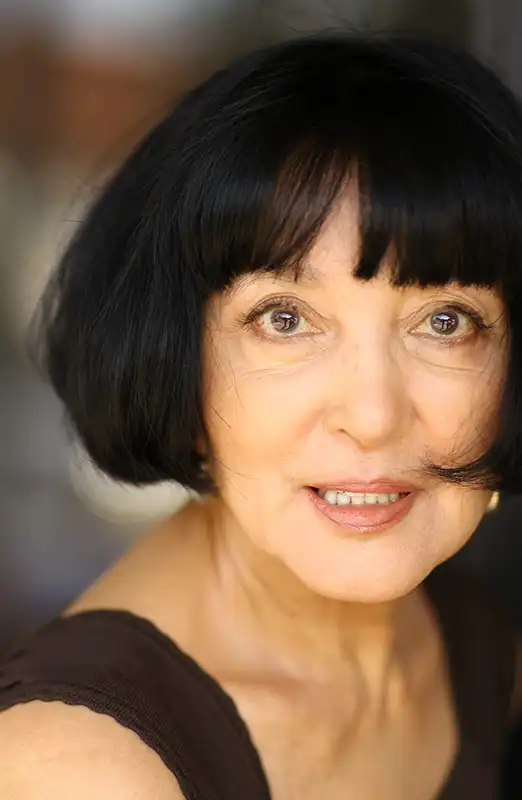
Natasha O. Ramer
With over five decades of experience in Russian theater, NATASHA O. RAMER is a distinguished director, playwright, actress and educator whose work has bridged cultures and captivated audiences worldwide.
A graduate of the prestigious Russian Academy of Theatre Arts (GITIS) in Moscow, Natasha earned her Master of Fine Arts in directing and acting under the mentorship of Maria O. Knebel — a celebrated actress, visionary director, and inspiring professor trained by Michael Chekhov and Konstantin Stanislavsky.
After completing her studies, Natasha served as a theater director across various Russian cities, including her tenure as Artistic Director of the Siauliai Drama Theater in Lithuania.
In 1982, Natasha emigrated to the United States, eventually settling in New Orleans in 1984. In 1999, she founded Moscow Nights, Inc., Louisiana’s only 501(c)(3) non-profit organization dedicated to bringing the richness of Russian and Eastern European theatrical and musical traditions to audiences in the Greater New Orleans area.
Natasha has been a vital force in New Orleans’ theater scene for over 25 years, blending her deep roots in Russian artistry with her passion for creating meaningful, cross-cultural connections through the performing arts.
What is your film about?
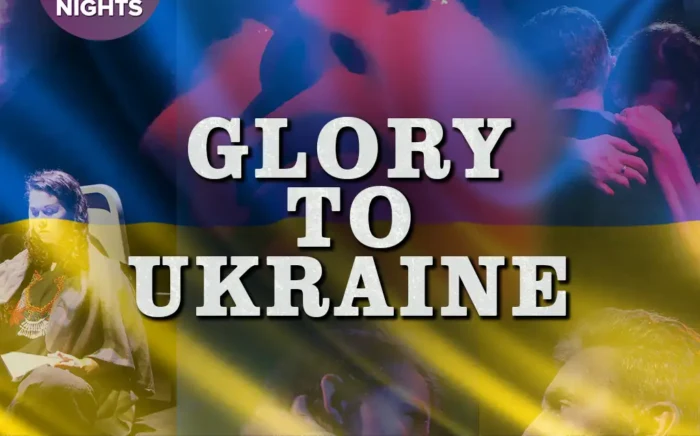
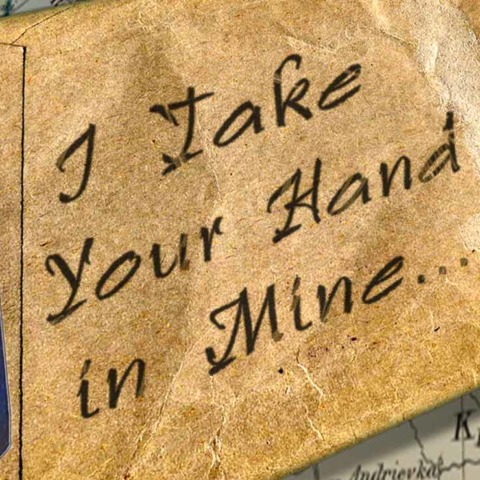
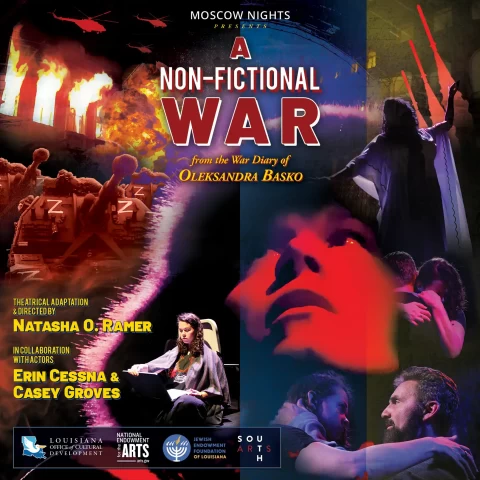
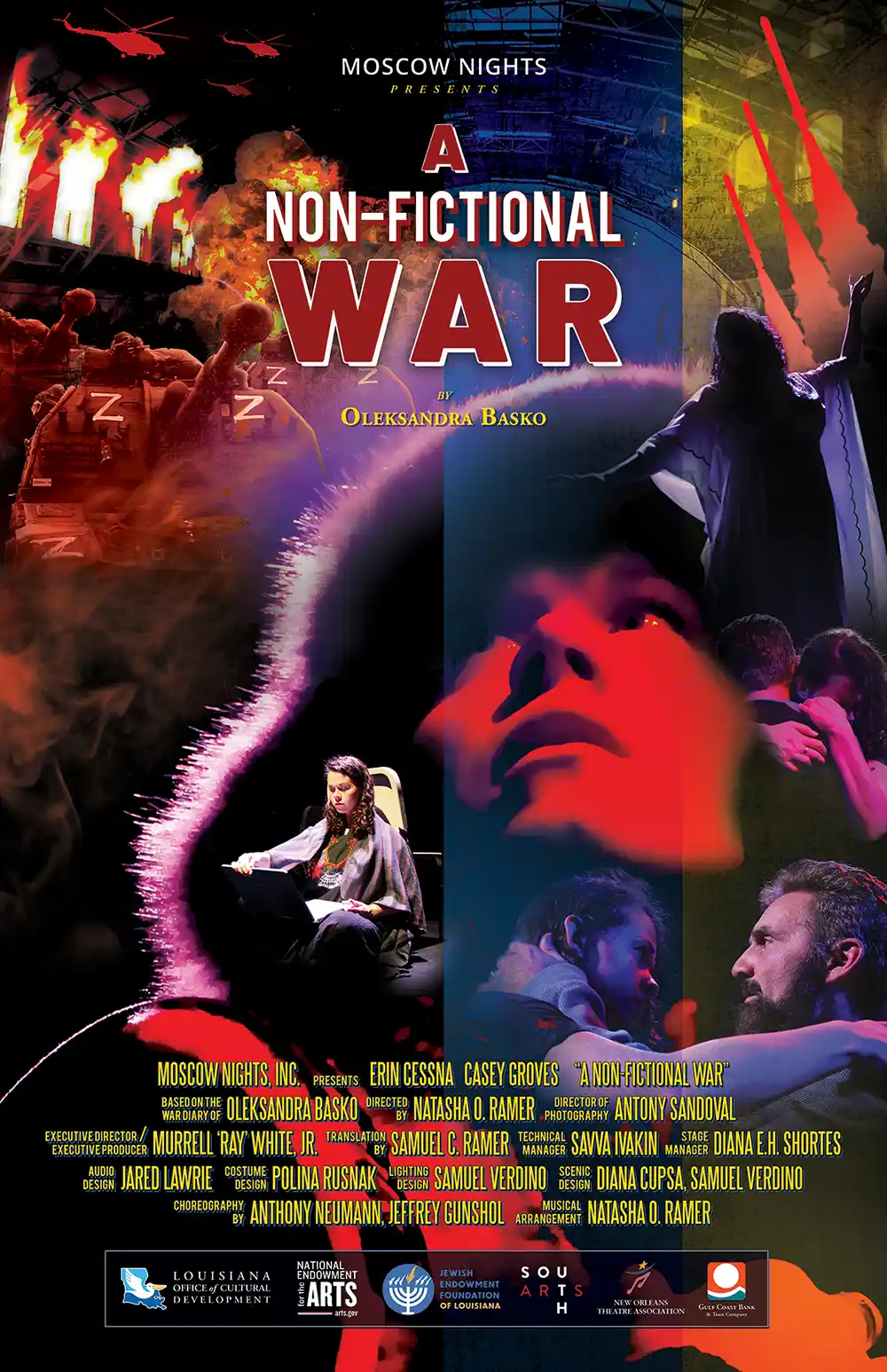
In the first hours following Vladimir Putin’s invasion of Ukraine on February 24, 2022, the world as we knew it shifted. Like so many, I was in shock — but what pierced me most deeply was a war diary I received from a young woman in Vinnytsia, Ukraine. Her words were not political analysis; they were immediate, intimate, and raw — the lived experience of invasion unfolding in real time.
The diary left a profound impression on me. I felt an urgent responsibility to give her voice a stage.
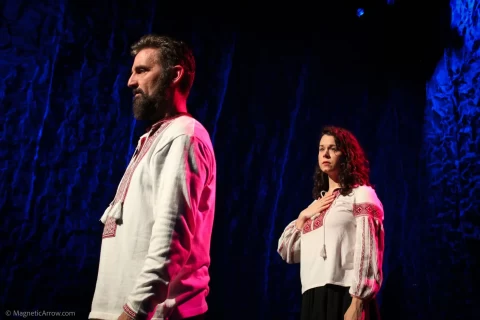
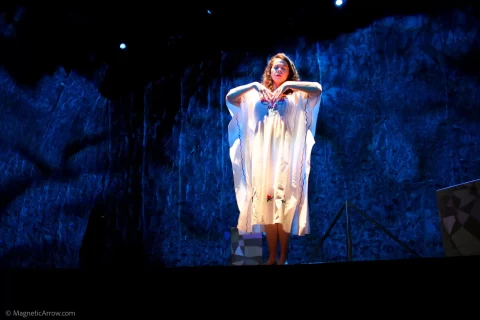
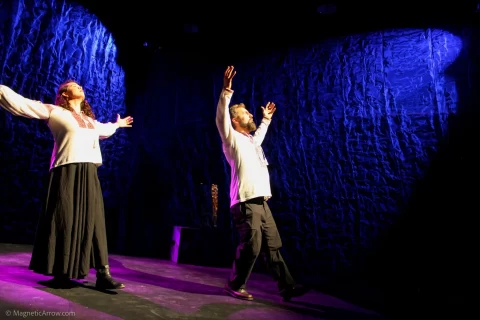
I created a theatrical work based on the first six days of her diary. We presented it once before a live audience, and during that performance we filmed the production with three cameras. What began as an act of artistic solidarity unexpectedly evolved into something far larger than we anticipated.
Out of that single performance, our theatre-on-film — an experimental hybrid of stage and cinema — was born. The film developed organically and unpredictably, carrying the urgency and emotional immediacy of those first six days into a cinematic form.
What are your ambitions with your project?
My ambition has always been that this theatrical work, transformed into a film, could reach audiences far beyond its local origins. I envisioned the film traveling first through national and international film festivals, allowing global audiences to encounter this deeply human story. Ultimately, my hope is that it will find a home on an international streaming platform, where viewers may continue discovering it for years to come.
What makes this journey especially meaningful is that the film was created by a small, regional New Orleans–based theatre company working with extraordinary local professional actors Erin Cessna and Casey D. Groves, Cinematographer and Post-Production Editor Antony Sandoval and Executive Director Murrell Ray White, Jr. From modest beginnings, we demonstrated that artists rooted in a local community can create work with universal resonance. Nearly two years later, the film’s continued presence in national and international festivals has proven that a locally born artistic response to world events can evolve into a truly global success story.
How was the shooting? What pleasantly surprised you?
We initially filmed a theatrical performance presented before a small live audience, simply hoping to preserve the immediacy of the stage experience. What followed surprised us completely.
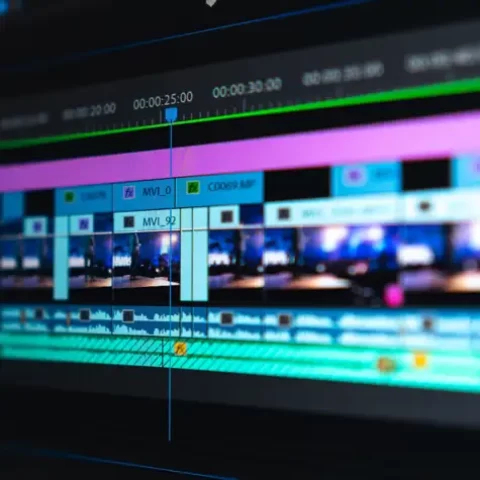
We soon discovered that transforming a theatrical performance into a true cinematic work required an extraordinary commitment of time, precision, and artistic labor. The post-production process — editing, shaping rhythm, refining sound, and constructing visual continuity from multiple camera perspectives — demanded far more effort than we had ever anticipated.
Looking back, we were genuinely astonished by the immense number of hours devoted to post-production. Yet it was precisely this painstaking work that allowed the film to transcend its theatrical origins and ultimately grow into an international success story.
For what target group is your film?
Our film is intended for general audiences worldwide. While it emerges from a specific historical moment — the early days of the war in Ukraine — its themes are universal: family, resilience, fear, hope, and the human capacity to endure during times of crisis. We believe the emotional truth of the story allows viewers from different cultures, generations, and backgrounds to connect with it on a deeply personal level.
How would you specify your work? What characterizes your film?
Our work revives and reimagines the “theatre-on-film” format — a hybrid form that bridges the immediacy of live performance with the language of cinema. We began with a staged theatrical presentation, but through the creative possibilities of multi-camera filming and extensive post-production editing, the project evolved into an experimental film.
What characterizes the film is this dynamic tension between stage and screen. It preserves the emotional intensity and authenticity of live theatre while embracing cinematic tools — editing rhythm, framing, and sound design — to deepen the audience’s experience. The result is not simply a filmed play, but a deliberately crafted hybrid work that explores the expressive boundaries between theatre and film.

Why did you decide to become a filmmaker?
The answer may sound deceptively simple: Covid!
When the pandemic shuttered theatres around the world and live performance became impossible, I faced a profound artistic crossroads. After more than fifty years in live theatre as a Theater Director, my life’s language is the stage. Suddenly, that language had no physical home.
Rather than remain still, I chose to step fully into the 21ST century. I began exploring how a “theatre-on-film” approach — blended with experimental cinematic techniques — could preserve the intimacy and emotional immediacy of theatre while reaching audiences beyond closed venues.
For me, becoming a filmmaker was not an abandonment of theatre, but an evolution of it. It was a leap — personally and artistically — into a new medium that allowed storytelling to continue when the stage went dark.
Who is your greatest role model?
Steven Spielberg. His work demonstrates the extraordinary power of cinema to unite artistry with emotional accessibility. Spielberg has the rare ability to tell deeply personal human stories while reaching global audiences across cultures and generations.
As someone who transitioned from a lifelong career in theatre into filmmaking, I admire how he combines technical mastery with profound humanity. His films remind me that cinema, at its best, is not only spectacle — it is empathy, memory, and shared human experience.
Which movies are your favorites? Why?
Each decade of my life has brought new cinematic discoveries and new artistic inspirations. My favorite films span cultures and eras, reflecting my lifelong dialogue between theatre, literature, and cinema.
Among them are Roman Holiday, directed by William Wyler and starring Audrey Hepburn, for its elegance, humanity, and timeless emotional simplicity; Claude Lelouch’s French Classic, A Man and a Woman, which captures intimacy and memory with poetic sensitivity; and the Russian masterpiece Ballad of a Soldier by Grigory Chukhrai, whose quiet humanism continues to move me deeply.
I also admire Federico Fellini’s Nights of Cabiria for its compassion toward the human spirit, Bernardo Bertolucci’s The Conformist for its visual and psychological sophistication, and Alexander Sokurov’s Russian Ark, which demonstrates how cinema itself can become a living work of art.
These films inspire me because they combine strong artistic vision with emotional truth — reminding me that cinema, like theatre, has the power to transcend language and speak directly to the soul.
Where do you look for inspiration for your films?

How would you rate current filmmaking?
Every filmmaker begins with a first film ~ this is mine. What excites me about contemporary filmmaking is its openness: new technologies and hybrid forms now allow artists from different disciplines to enter cinema and experiment freely. My own journey reflects this evolution, moving from stage to screen and exploring how theatrical storytelling can find new life through film.
For me, filmmaking today is a process of continual learning, artistic risk, and creative growth.
What are your next projects?
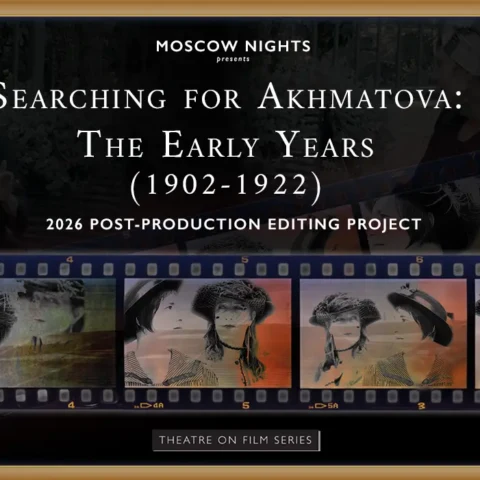
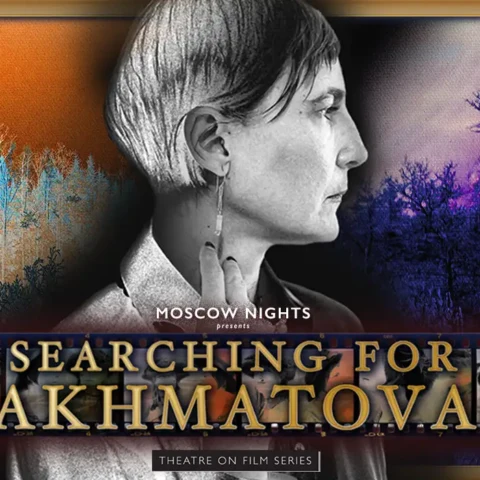
We have completed principal photography, and the project is now entering its final and most demanding phase: post-production editing. As with my previous work, the film blends theatrical reenactment with documentary research, continuing my exploration of hybrid cinematic form.
This project represents a natural artistic progression for me — deepening my commitment to bringing literary history to contemporary audiences through an innovative fusion of stage and screen.
This interview was originally published on Best Film Awards website: LINK